

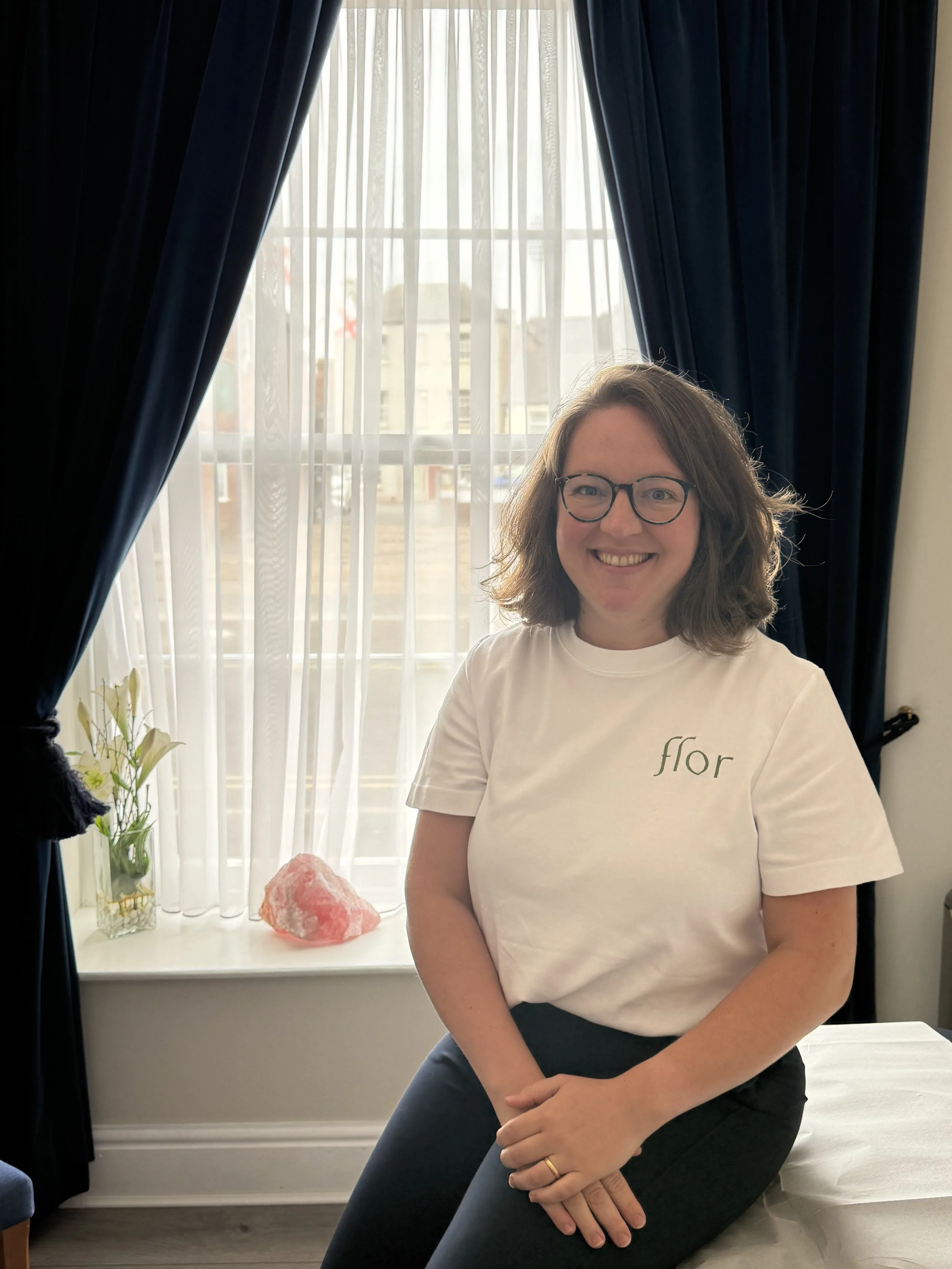
Some seasons ask more of the body. Navigating these physical changes can often feel isolating or embarrassing, but we want you to know you are not alone. At Flor, we provide a "quiet, safe place" for you to heal and understand your body. Welcome to Flor, Taunton’s dedicated boutique clinic specialising in pelvic floor health and women’s physiotherapy.
What is Pelvic Health Physiotherapy?
I believe that pelvic health is central to a woman's quality of life. Pelvic health physiotherapy is a highly specialised medical field that goes far beyond general physiotherapy training. It requires advanced clinical expertise to safely assess, treat, and rehabilitate the complex muscles, nerves, and connective tissues of the pelvic floor. Crucially, this practice focuses on challenging the social norm that "leaking" or pain is an inevitable, untreatable part of womanhood.
Why Specialist Training Matters?
Our practice and environment are intentionally designed to lower the anxiety often associated with pelvic examinations. However, true body autonomy begins with complete transparency.
To properly and safely assess your pelvic floor, a physiotherapy assessment requires internal palpation in real time. We understand that this is the most intimate part of your visit, as it typically involves a vaginal and/or rectal examination. This is exactly why extensive, specialised training exists for this field. Without this internal assessment, it is physically impossible to truly understand how your muscles are functioning.
Legitimate Pathways for Pelvic Health
When you are seeking help, it is vital to know who to see. The legitimate pathways for care depend entirely on whether your issue is rehabilitation-based or requires medical intervention.
If you need:
Rehabilitation: Pelvic Health Physiotherapist focuses on assessing and rehabilitating the muscles, nerves, and tissues of the pelvic floor through targeted physical therapy and internal assessment. We often focus on a whole body review and treatment.
Medical: Gynaecologist is a medical doctor specialising in the general health, diseases, and routine care of the female reproductive system. Urogynaecologist is a highly specialised doctor focusing specifically on complex pelvic floor disorders, severe organ prolapse, and surgical interventions for incontinence.
A Note on Alternative Therapies: While personal trainers, osteopaths, chiropractors, and other alternative therapists offer valuable services, they do not have the clinical training required for internal pelvic floor assessments. Because of this, they might miss crucial medical red flags. Even though exercise is always needed or manipulation rarely sometimes, these practitioners are not qualified to determine if your pelvic floor is weak, highly active, or non-coordinating.
How to Vet a Pelvic Health Practitioner
A Pelvic Health Physiotherapist requires a degree in Physiotherapy and a complete postgraduate theoretical and practical training throughout supervised clinical practice and additional certification. When seeking care for such an intimate and vital part of your body, it is essential to find a highly qualified specialist. Here is how you can properly vet a practitioner before booking:
HCPC Registration: Ensure they are officially registered with the Health and Care Professions Council. Every physiotherapist that has appropriate regulation registration in the UK will have a HCPC registration and you can search for them on the HCPC website.
A Full Guide to What We Treat
We combine evidence-based clinical treatments with a calming wellness environment to help you rebuild strength, restore function, and feel empowered in your body. The specialised pelvic floor physiotherapist helps you confidently manage and resolve issues by addressing specific physical concerns to restore daily mobility.
We provide expert, compassionate care for:
Pre-conception / Pre-pregnancy: support for women throughout their initial pre-pregnancy transitions. Embracing our philosophy of "preparation before repair," we proactively help you build a strong physical foundation to confidently navigate your upcoming journey into motherhood. Women with sexual dysfunctions (such as vaginismus, which in simple words is the difficulty in having intercourse penetration), pain management from endometriosis and past surgeries, tissue mobility from adhesions acquired from past surgeries.
Pregnancy: the physiotherapist cover the challenges of body changes during the pregnancy time. It can help you feel stronger, more mobile, prepare your pelvic floor, review any previous scars/ surgeries adhesions or fibrosis. Prevention here is key to have an easier postpartum recovery independently of the birth route.
Postpartum: By rejecting the "quick fix" medical model in favor of our "slow bloom" philosophy. We work to resolve specific physical concerns like diastasis recti (core separation - that can begin with prevention in pregnancy), pelvic girdle pain, and incontinence so you can rebuild strength and restore function. It is also very important to have close review and follow up to return safely to high impact exercise such as running and jumping.
Pelvic Girdle Pain: We help manage and resolve debilitating pelvic joint pain. We help you understand why these conditions happen and how can we modify environment, exercise and postural habits.
Incontinence: We provide targeted treatments to resolve bladder and bowel leaking.
Sexual Dysfunctions: We help manage and resolve pain or discomfort during intimacy.
Diastasis Recti: We expertly guide you through healing core separation (as a highlight a lot here, the prevention starts during pregnancy with a correct abdominal and core activation).
Life-Stage Transitions: We support women experiencing menopause or athletic injury who feel restricted by pelvic floor dysfunction.
The Flor Philosophy: Preparation Before Repair
Flor means flower, and nothing here is rushed into bloom. We firmly reject the "quick fix" in favor of a "slow bloom" philosophy. Here, we advocate for proactive "preparation before repair" to help expectant mothers confidently navigate birth and recovery. By blending clinical expertise with a nurturing, nature-inspired environment, we aim to make you feel supported, understood, and confident rather than just treated.
Begin Your Journey With Us
You do not need a GP referral to begin your healing journey with us. Furthermore, your baby is always welcome to accompany you to your appointments. Based in Taunton, Somerset, our service area proudly supports women from Bristol, Bridgwater, Wellington, and the broader United Kingdom.
Book your specialised pelvic health assessment today. We are here to provide women’s health care that helps you reclaim your quality of life.