

A Clinical Approach to Pelvic Floor Exercises. The Essential Guide to Technique (Part 3)
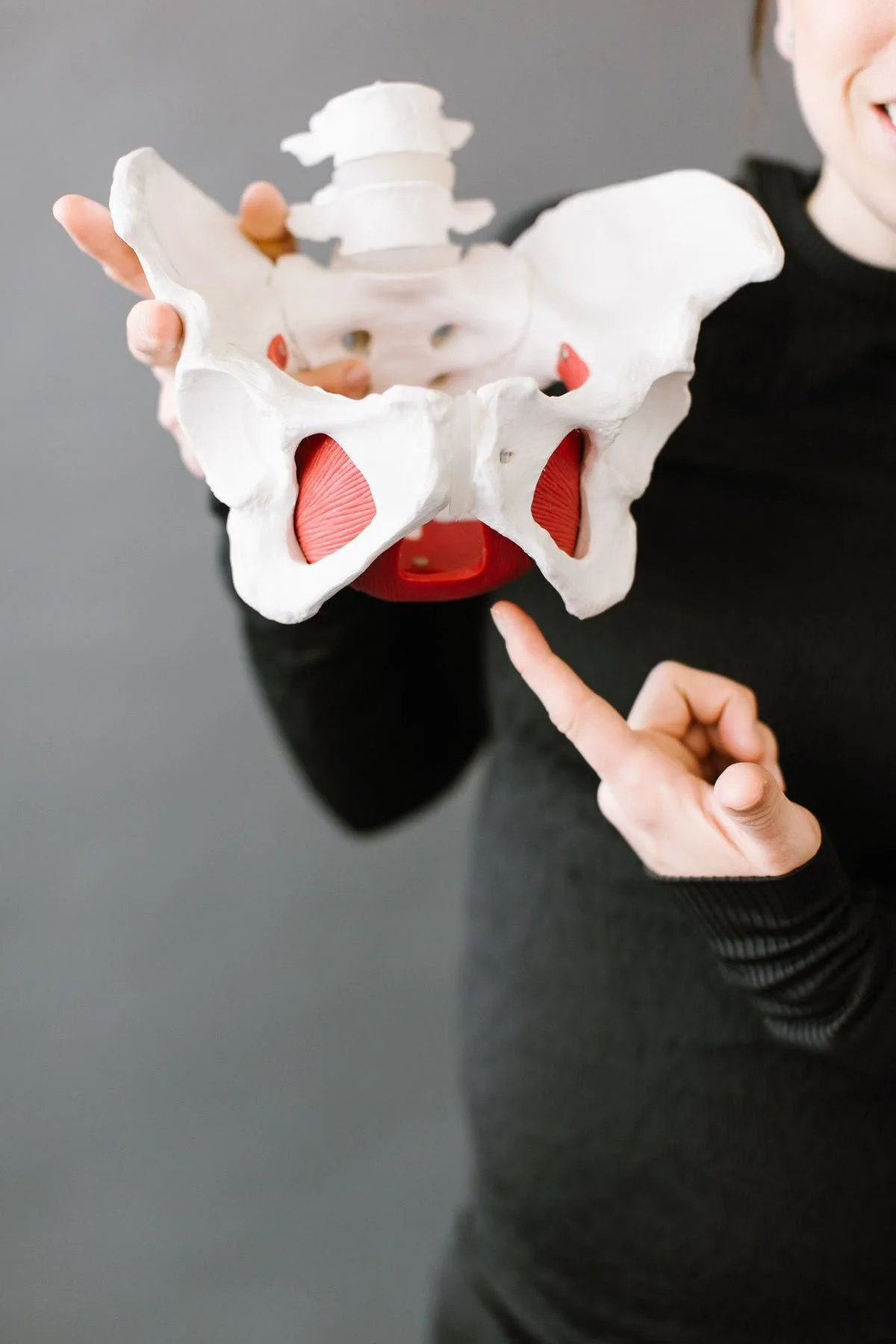
I started writing this blog post and I noticed that it became too big, as you can see there is quite a lot to take on on just do your kegels (and I quite like a bit of detail). So I decided to divide it in 3 parts. Today, we will learn about the squeeze itself.
Now that you can feel your pelvic floor and coordinate it with your diaphragm, it is time to discuss how to build actual strength and functional power.
In the clinical world, this is where many generic guides fall short. People are often told to "do 100 Kegels a day," usually while stuck in traffic or sitting at a desk. But doing endless, uncoordinated squeezes without structure won't build a resilient pelvic floor, and in some cases, it can lead to fatigue, compensation, or hypertonicity (all of this equals to aka weakness).
To build a pelvic floor that actually works when you need it, we need to train it like any other muscle group in the body: with specificity, intentional dosage, and functional movement.
1. Training the Two Muscle Fiber Types
Like I mentioned on Part 1, your pelvic floor is composed of two distinct types of muscle fibers, each serving a completely different purpose in your everyday life:
Slow-Twitch Fibres (Endurance & Support)
These fibres make up roughly 70% of your pelvic floor. They act as your baseline support system, maintaining low-grade tension all day to support your pelvic organs and keep you continent. (1)
How to train them: Focus on a sustained Lift and Hold.
The Goal: Gently lift the pelvic floor. There are a few cues for that:
Imagine you have a zipper that goes from the back passage (anal area) towards the front of your vagina. As you squeeze in, think of closing this zipper up from back to front, aiming for 30–50% effort, (as practiced in Part 2) and hold it for maximum of 10 seconds while continuing to breathe normally. and then let it go.
When holding for a maximum of 10 seconds, you will understand that you may or may not get to this number. For example, if you manage to get to 5 seconds, and the 6th second feels already difficult to keep the contraction, then the subsequent contractions will be only up to 5 seconds.
Repeat them for a maximum of 10 times. Again, you may or may not reach this number. Let’s say you manage to get to 7 times, holding for 5 seconds. The 8th time is already difficult. We then know, it is time to stop. (2)
The progression is simple: it is easier to do the exercises lying on your back, then on your side, sitting up and, for last, standing up. You should only progress if you feel comfortable doing them in each one of these positions before passing to the next one.
The Golden Rule: Do not hold your breath. If you have to hold your breath to hold the squeeze, you are using intra-abdominal pressure to cheat the contraction.
Fast-Twitch Fibres (Power & Reaction)
The remaining 30% are your "sprint" fibers. These react in milliseconds to sudden increases in intra-abdominal pressure, like when you cough, sneeze, laugh, or jump. (1)
How to train them: Focus on Quick Flicks.
The Goal: Perform a swift, sharp lift of the pelvic floor, immediately followed by a complete, conscious release.
Again, we will perform a maximum of 10 times. And it works the same as in the slow fibres. You may or may not reach to this number, and if you do not keep it to the amount of repetitions you manage to do.
The Rhythm: squeeze - release - relax - repeat. Aim for speed and full range of motion rather than force. If you find hard to let go so fast, give yourself 2-3 seconds before squeezing again.
2. Rest is 50% of the Exercise
If there is one message I want you to take away from this series, it is this: a muscle cannot strengthen if it never relaxes.(1)
When training endurance holds, your rest period must be equal to or longer than your contraction time. If you hold a lift for 6 seconds, you must fully release and breathe for at least 6 to 8 seconds before the next repetition.
Note: A fatigued pelvic floor stops contracting efficiently. When you push through fatigue, your brain automatically recruits helper muscles (your inner thighs, glutes, or lower abs) or worse, starts bearing down. Quality will always trumps quantity. 5 clean, coordinated repetitions beat 30 fatigued, clenching ones every single time.
3. The "Knack": Bridging the Gap to Real Life
We do not live our lives lying on a yoga mat. A pelvic floor that only works while you are lying on your back is not particularly helpful when you are lifting a toddler, carrying heavy groceries, or caught in a coughing fit. (3)
This brings us to a vital clinical concept known as "The Knack" (a preemptive contraction).
Before you perform an activity that increases pressure in your abdomen, like lifting, blowing your nose, coughing, or standing up from a deep squat:
Prepare: Inhale softly.
Pre-engage: Gently lift your pelvic floor just before or as you initiate the exertion/exhale.
Release: Fully let go of the contraction as the effort finishes.
By practicing this, you are retraining your nervous system to automatically protect your pelvic organs and bladder during movement.
4. Progressing Your Practice: The Movement Continuum
To truly integrate your pelvic floor into daily life, you must gradually progress the positions in which you exercise:
Gravity-Assisted (Lying Down): Best for learning technique, reconnecting, or recovering post-partum/post-surgery.
Gravity-Neutral (Seated or Side-Lying): Builds endurance without the full weight of your organs resting on the muscle bed.
Gravity-Resisted (Standing): Essential for functional, day-to-day strength.
Dynamic (In Motion): Performing lifts during squats, lunges, walking, or lifting weights.
Moving Forward with Confidence
Pelvic health is not about perfection or squeezing as hard as you can. It is about restoring balance, responsiveness, and trust in your body's foundation.
If you take away anything from this three-part guide, let it be these principles:
Breath first, squeeze second.
Lift with nuance, not brute force.
Always honor the full release.
Need Personalised Guidance?
While these principles offer a solid clinical foundation, pelvic floor rehabilitation is never one-size-fits-all. Symptoms like persistent leakage, pelvic heaviness, pain with intimacy, or an inability to feel these muscles at all deserve a tailored approach.
Always keep in mind that all of this has to be personalised to each woman and there is no “recipe“ at all that fits everyone. It is important that all your symptoms are looked into with care and assessed by a professional to provide you a guidance that is fit for you.
If you are ready to get to the root cause of your symptoms, you can schedule a comprehensive, individualized assessment with us at. Let's get you moving with confidence again!
References
1.Gilpin, S. A., Gosling, J. A., Smith, A. R. B., & Warrell, D. W. (1989). The pathogenesis of genitourinary prolapse and stress incontinence of urine. A histological and histochemical study. BJOG: An International Journal of Obstetrics & Gynaecology, 96(1), 15-23. https://doi.org/10.1111/j.1471-0528.1989.tb01570.x
2.MedlinePlus. (2024, October). Pelvic floor muscle training exercises. National Institutes of Health (NIH) / National Library of Medicine. https://medlineplus.gov/ency/article/003975.htm
3.Miller, J. M., Ashton-Miller, J. A., & DeLancey, J. O. L. (1998). A pelvic muscle precontraction can reduce cough-related urine loss in selected women with mild SUI. Journal of the American Geriatrics Society, 46(7), 870-874. https://doi.org/10.1111/j.1532-5415.1998.tb02721.x